P001Aiko NishimuraStreet with Two Timetablesgame Example0002
Example portfolio. Kept here to show the layout while student work is added.
Lives between Eindhoven and Kyoto.
Thesis: Residents Only: Timetables, Queues and the Tourist City
Street with Two Timetables is a card-and-board game for four to six players, each playing one household on a single street. The board is drawn from two real places: a sloping lane in Higashiyama, Kyoto, where Aiko Nishimura's grandmother still lives, and a side street in the Jordaan in Amsterdam.
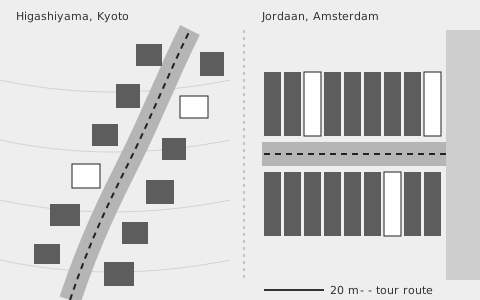
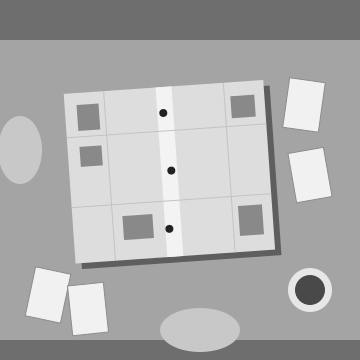
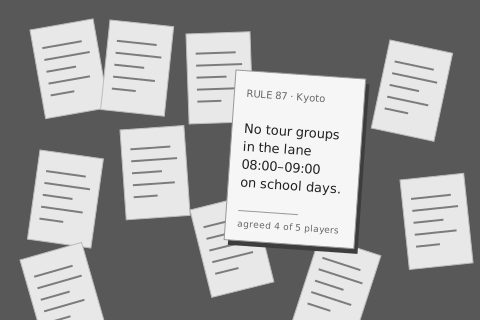
Every round is one day. Residents need to reach the bakery, the doctor and the bus stop; visitors arrive in waves on tour-group cards; holiday rentals flip houses on the board from one side to the other. Each resident token loses patience when its route is blocked. Instead of moving, players can spend a round negotiating: closing the lane to groups during school hours, capping rentals on the street, shifting the tour timetable by an hour. Every rule they invent is written on a blank card and stays in the deck for the next game.
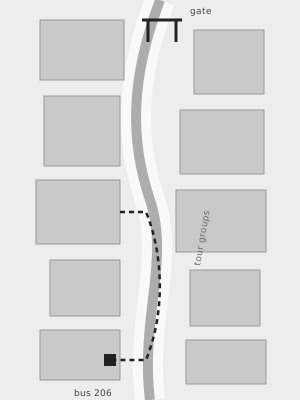
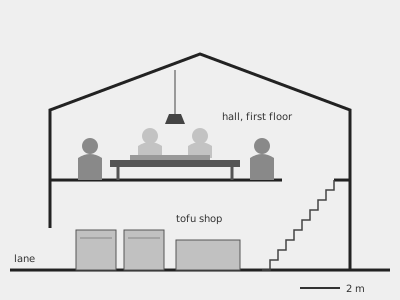
The game was developed over eleven sessions with residents' associations in both cities, a licensed tour guide, a short-stay landlord who agreed to play his own side, and a municipal enforcement officer. In Kyoto the sessions took place in a neighbourhood hall above a tofu shop; in Amsterdam, in a community centre two streets from the board.
So far players have written 146 rule cards, and copies have been sent to both district offices. The version in the show has the Kyoto and Amsterdam cards shuffled into one deck.
P002Clara SchmittWho Gets the Quiet Room?research Example0004
Example portfolio. Kept here to show the layout while student work is added.
Researcher and sound maker based in Eindhoven.
Thesis: The Politics of Quiet: Noise, Housing and Who Gets to Rest
Quiet is sold. It is in the rent of a house facing a garden, in the price of triple glazing, in a job that lets you sleep at night instead of during the day. I spent a year measuring who in Eindhoven gets it.
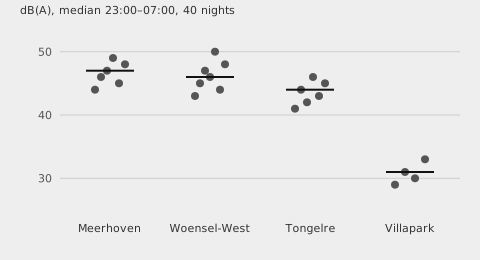
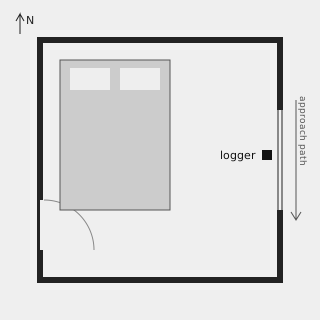
Twenty-three households lent me their bedrooms. Each had a small sound-level logger on the windowsill for forty nights, recording every minute. They were in Meerhoven under the approach path to the airport, in flats beside the Ring in Woensel-West, in a terraced street along the railway in Tongelre, and in Villapark, where the loudest event in forty nights was a neighbour's leaf blower.
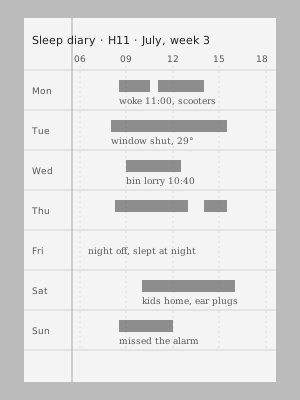
The decibels were the easy part. The harder data came from the diaries I asked people to keep: when they shut the windows in July and overheated instead, which child got the room at the back, who slept with foam plugs and missed the alarm. Four participants worked nights, a cleaner, two nurses and a warehouse picker, and their sleeping hours fell exactly when the street was loudest.
With an acoustician I compared the loggers against the municipal noise map. The map is a model averaged over a whole year; it put Woensel-West several decibels below what we measured, because it does not count scooters, bin lorries or a television through a thin wall.
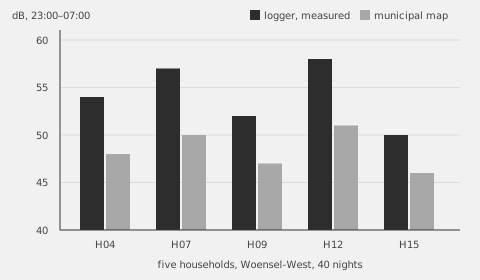
What remains is a set of readings that each household owns, a short text written with a GP about sleep and the conditions for it, and one proposal to the district council: log noise complaints by the hour they happen, so that people who sleep in the daytime can complain too.
P003Dmytro KovalenkoHand Luggageinstallation Example0006
Example portfolio. Kept here to show the layout while student work is added.
Lives and works in Eindhoven since 2022.
Thesis: What Fits in a Bag: Objects of Displacement
When my family left Kharkiv in March 2022, my grandmother packed a colander. The photographs and documents were in my mother's bag. My grandmother took a dented aluminium colander, because she knew there would be a kitchen somewhere and she did not trust it to have one.
This project started from that colander. Over eighteen months I asked forty-one people who left Ukraine, Syria, Eritrea and Afghanistan, and who now live in Eindhoven, Tilburg and Den Bosch, what they carried and why. I did not ask about the journey. I asked about the object: its weight, where it sat in the bag, whether it was used on the way, where it is now.
Most of the objects were ordinary and practical. A pair of nail scissors. A charger for a phone that no longer exists. A key to a flat in Saltivka that has since been repaired by someone else. One man carried a jar of soil and then felt embarrassed about it for two years.
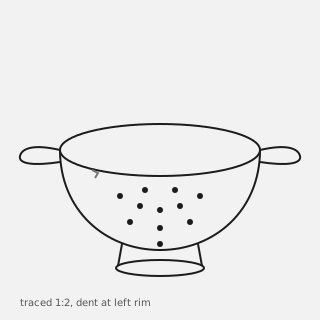
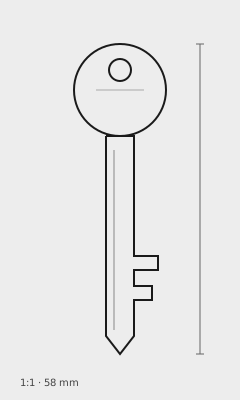
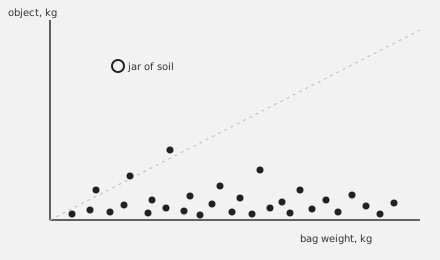
The installation is a run of shelves at bag height. Each object appears as a traced outline with a short text by the person who carried it, in the language they chose. Seven of the original objects are on loan for the show and go home with their owners every evening. The rest stay as outlines, because their owners still use them.
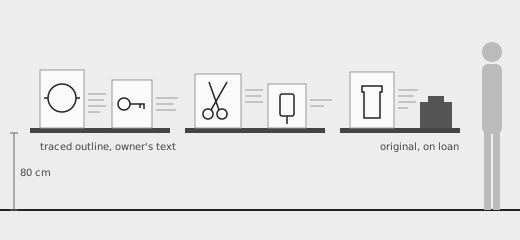
I traced every object by hand on the kitchen table of the person who owns it. That was the method: sitting with someone while a pencil goes around the edge of something they decided to keep.
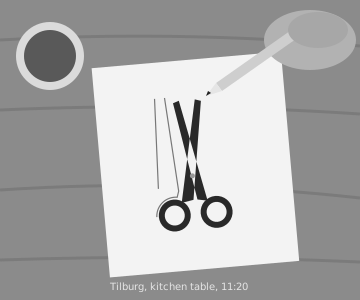
Made with a translator, two social workers from a reception centre in Budel, and the owners of the objects, each of whom approved their own text.
P004Ewa ZielińskaAfter the Flowers: Twelve Questions for the Second Yearpublication Example0008
Example portfolio. Kept here to show the layout while student work is added.
Designer and former hospice volunteer.
Thesis: The Second Year: Grief After the Rituals End
A pocket book in an edition of 200, written with a bereavement counsellor, a funeral director in Woensel, two cemetery gardeners in Kraków and eleven people who lost someone more than a year ago. One question per page, nothing else.
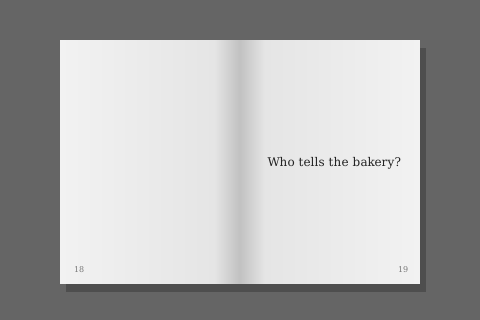

What do you do with their phone number?
Who is allowed to wear the coat?
How long can the voicemail greeting stay?
Should you still light a candle on 1 November if nobody else in the family goes to the grave?
What happens to the group chat after the last message?
Who tells the bakery?
Who cancels the newspaper, and does it feel like a second death?
Which of their habits have you taken over without deciding to?
Where do the ashes go when you move house?
Is it allowed to be relieved?
Can grief be scheduled, and would that help?
What would a ritual look like that you could do alone, on a Tuesday, in ten minutes?
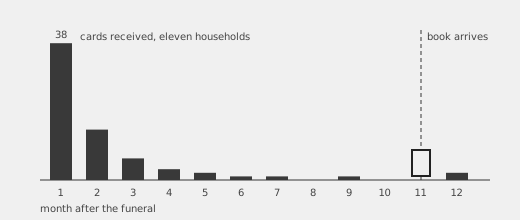
The book is posted to families eleven months after a funeral, when the cards have stopped arriving.
P005Freya Lindgrenone radiator, eleven householdsproject Example0009
Example portfolio. Kept here to show the layout while student work is added.
Works on energy, housing and collective tools.
Thesis: Shared Heat: Energy Poverty and the Collective Radiator
In the winter of 2025, eleven households in a 1960s gallery flat in Lakerlopen were each deciding which rooms to stop heating. Freya Lindgren began by asking them a single question: if you could keep only one room warm, which would it be?
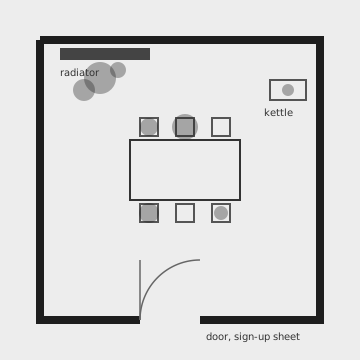
The answers led to one heated room on the ground floor, a former bicycle storage the housing corporation agreed to lend for a season. It had one radiator, a kettle, a meter anyone could read and a sign-up sheet taped to the door. Residents used it for homework, drying laundry, a seventieth birthday, and sitting.
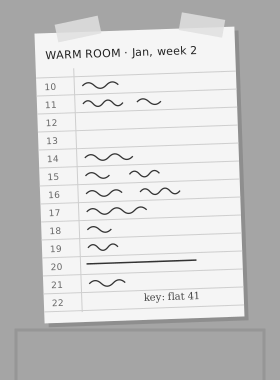
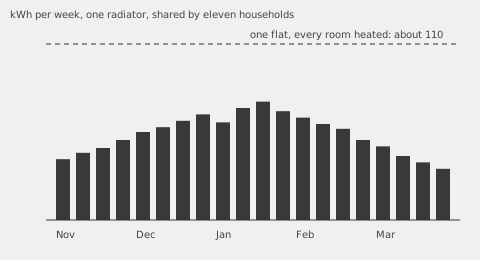
The project documents what it costs to heat one room for many people instead of many rooms for one, and what has to be negotiated once warmth is shared: noise, cooking smells, who holds the key after ten. Lindgren worked with the building caretaker, an energy coach from the neighbourhood team and a retired heating engineer from the fourth floor. The meter readings and every sign-up sheet are shown in full.
P006Hana VondráčkováWhat the Drawer Holds: 212 Phones and the Ore Mountainspublication Example0010
Example portfolio. Kept here to show the layout while student work is added.
Designer and writer.
Thesis: Ore in the Drawer: Tracing Lithium from the Ore Mountains to the Pocket
I grew up forty kilometres from Cínovec, on the Czech side of the Ore Mountains, where a mine is planned on one of the largest lithium deposits in Europe. When I moved to Eindhoven I found the other end of that story in a kitchen drawer. My flatmates and I had nine old phones between us, and none of us knew what to do with them.
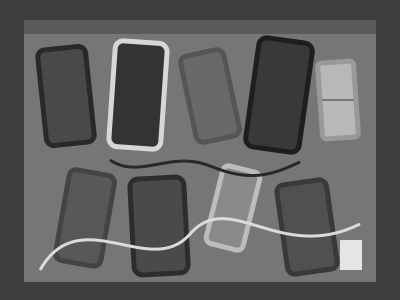
For this project I collected 212 unused phones from students and staff at the academy and from households in Strijp-S and Gestel. I weighed all of them, opened forty with the help of an electronics recycler in Veldhoven, and separated batteries, screens, boards and casings. Then I went back to the villages above the planned mine and asked people what they expect to lose and what they expect to be paid.
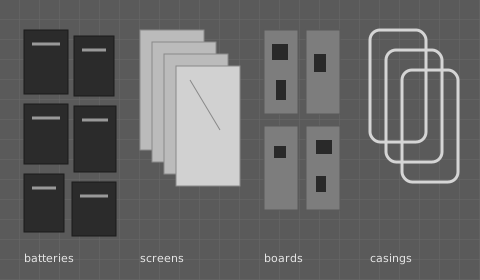
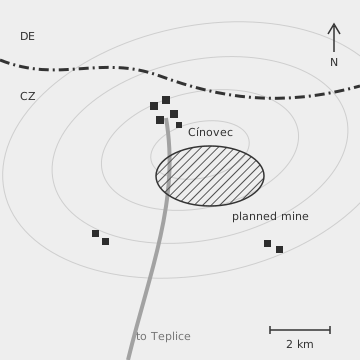
The publication has two halves printed back to back. One follows the drawer: how long each phone was used, why it stopped, where its owner thought it would end up. The other follows the mountain, through interviews with a beekeeper, a village schoolteacher, a mining engineer, a local councillor and two teenagers who want the jobs. The halves meet in the centre spread, a table listing by weight what came out of forty phones.
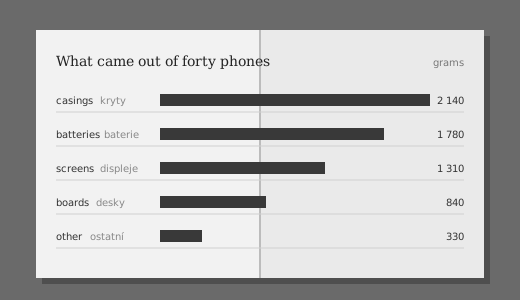
Some of the people I interviewed want the mine, and I am not trying to argue them out of it. I wanted the two halves to face each other: the people who will live beside the pit, and the people who keep what came out of it in a drawer because throwing it away feels wrong.
The phones go to a certified recycler after the show. The publication is printed in an edition of 300, in Czech and English, and is posted free to anyone in the villages who asks for a copy.
P007Ilse van den BroekThe Third Halffilm Example0012
Example portfolio. Kept here to show the layout while student work is added.
Plays left back for a Sunday team in Woensel.
Thesis: The Club as Infrastructure: Amateur Football and Civic Life
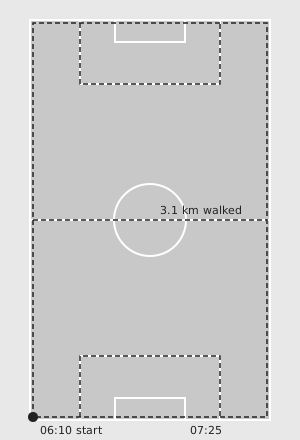
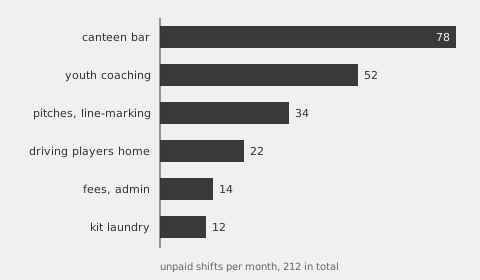
In Dutch amateur football the derde helft, the third half, is what happens in the canteen after the match. Ilse van den Broek spent one season, August to May, at a club on the northern edge of Eindhoven with 610 members, four pitches and no paid staff. The result is a 41-minute film made almost entirely of the hours that are not football.
The camera stays with the people who keep the club open: the groundskeeper who marks the lines at six on Saturday mornings, the canteen volunteers who know which fathers are out of work, the treasurer who quietly lets fees slide, a youth coach who drives three boys home every week because no one else does. The matches appear only as sound through the canteen windows.
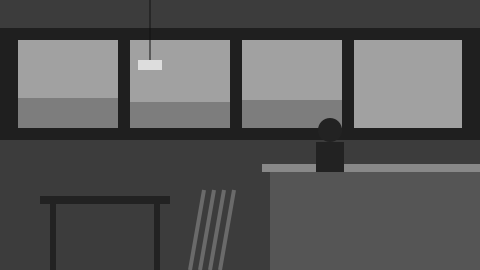
Alongside the film, van den Broek counted what the club does for its neighbourhood that nobody is paid to do: 212 volunteer shifts a month, a bar that is the only public room open after nine within two kilometres, a phone list of forty people who can be called to help someone move house. When the municipality reviewed its sports subsidies last year, it counted members and square metres of grass.
The film premiered in the canteen itself, on a Tuesday, for 130 people who stayed for the third half.
P008Ines Moreau-BakkerWhat Was Behind Blok Carchive Example0013
Example portfolio. Kept here to show the layout while student work is added.
Archivist and designer based in Rotterdam.
Thesis: Behind Blok C: Memory Work in a Demolished Neighbourhood
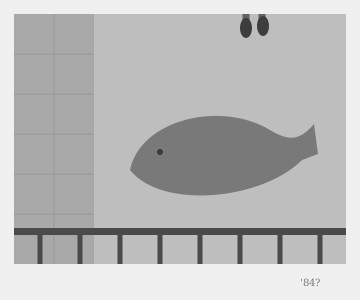
From 1958 until 2019, Blok C and its four neighbours stood on the edge of Doornakkers: 240 flats, a laundrette, a snack bar and a playground with a concrete whale. When the blocks were demolished, the housing corporation kept the floor plans. The residents kept everything else.
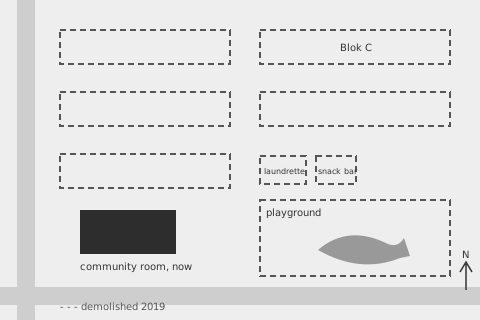
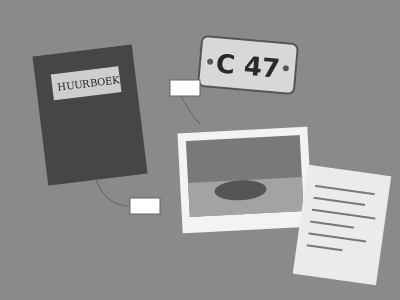
Ines Moreau-Bakker set up a collection point in the new community room on the same plot and asked former residents to bring what they still had: photographs, rent books, door numbers, the snack bar's sauce recipe. The archive now holds around 1,400 items, each catalogued by the person who brought it, in their own words. Below is part of a cataloguing session recorded in February.
— This one is the whale. Those are my brother's feet.
— Which year?
— Before the paint came off. So '84, '85.
— Do you want to write it, or shall I?
— You write. Put: the whale was grey first, then blue, then nothing.
— And who took the photo?
— My mother. From the balcony, fourth floor. You could see the whole playground from up there. That's why she let us go down alone.
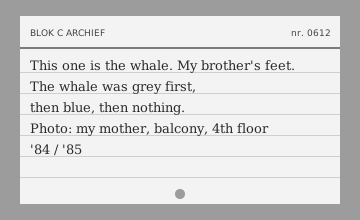
The archive lives in the community room and is open on Tuesdays, looked after by six former residents. It is also online, with the handwritten catalogue cards scanned exactly as they were filled in.
P009Juno VerhagenEleven Years, Four Months: A Waiting Room Built from the Housing Listinstallation Example0015
Example portfolio. Kept here to show the layout while student work is added.
Works with tenants' groups in Eindhoven.
Thesis: The Waiting Room: Time, Housing and the Social Rental List
Last spring I asked forty-one people in Woensel-Zuid, Tongelre and Gestel how long they had been registered for a social rental home. The median answer was nine years and two months. One woman signed up on the day her eldest was born; the girl is now doing her final exams and still shares a bedroom with her brother.
The list itself is a number on a screen, recalculated overnight. Nobody sees the queue, so nobody stands in it together, and nobody can tell the person behind them how long it took. I wanted to give the list the room it never had.
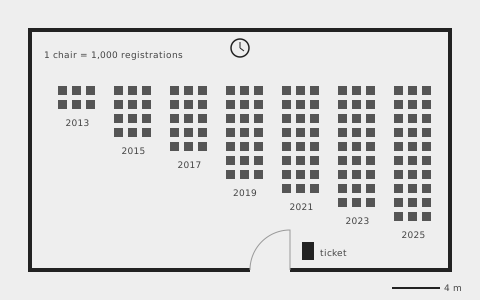
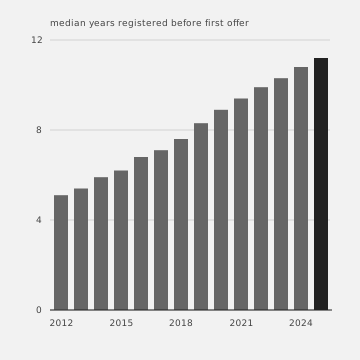
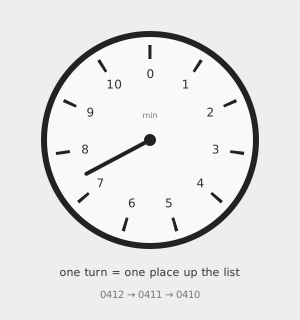
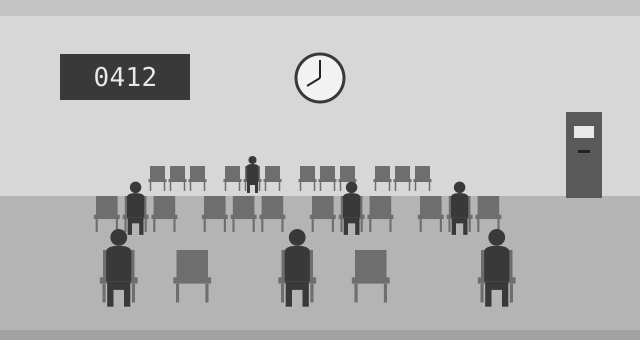
The installation is a waiting room at a scale of one chair per thousand registrations in the region: 135 chairs, grouped by the year people signed up. A ticket machine prints numbers carrying the registration dates collected in the interviews. The clock on the wall runs at the speed an average applicant moves up the list, roughly one position every eleven minutes.
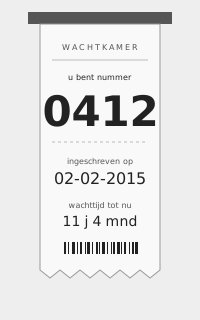
I built it with two members of a tenants' committee in Gestel, an allocation officer from a housing corporation who explained the points system over three long lunches, and a carpenter who salvaged the chairs from a closed municipal office. During the show visitors can take a number and sit down. On Tuesday evenings the tenants' committee holds its meetings in the room.
P010Kalinda FerreiraChoosing Shelfworkshop Example0017
Example portfolio. Kept here to show the layout while student work is added.
Volunteers at a food bank in Eindhoven-Oost.
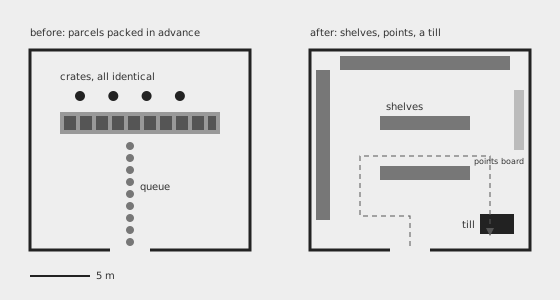
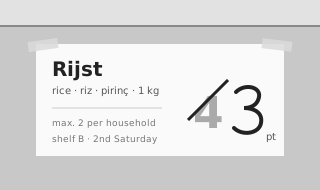
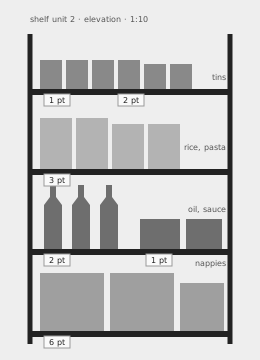
At a food distribution point in a church hall in Tongelre, parcels are packed in advance and handed out in identical crates. Over four Saturday mornings, volunteers and the people who collect the parcels rebuilt the hall as a small shop, with shelves, prices in points and a till, and then argued about what should stay. The shelves stayed.
P011Leila FarahaniRisk Score 0.71: Reading a Welfare Algorithm Back to the People It Flagstool Example0018
Example portfolio. Kept here to show the layout while student work is added.
Designer and data researcher based in The Hague.
Thesis: Read Back: Algorithmic Suspicion in the Welfare State
For two years, a mid-sized Dutch municipality ran a model that gave every person on social assistance a number between 0 and 1. Above 0.6, a caseworker was asked to take a closer look. Nobody who received the follow-up letter was told the number existed.
I rebuilt a version of that model from what is public: procurement documents, a technical annex released after three Woo requests, and a variable list that surfaced in the minutes of a council committee. It weighed 315 variables. Among them: how often you had changed address, whether you spoke Dutch at your intake meeting, and how long your last relationship had lasted.
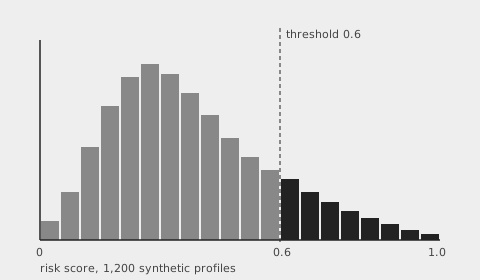

The tool is a deck of printed cards and a small offline web page. You answer the model's questions about yourself, or about an invented neighbour, and watch the score move. Nothing is saved. I tested it over five months with a peer group of benefit recipients who meet on Tuesday mornings in a library in Woensel-West, with a welfare-rights advocate, and with a former caseworker who had sent those letters herself.
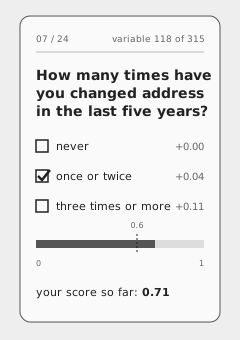
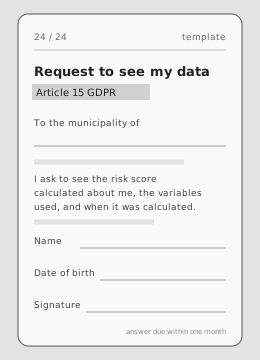
Nobody asked me for the maths. People asked which of their answers had counted against them, and whether anyone could be made to say so out loud. So the last card in the deck is a template for a formal request to see your own score, with the article number already filled in.
P012Lise-Marie DufourSunday Evening, 21:40film Example0020
Example portfolio. Kept here to show the layout while student work is added.
Filmmaker and social designer.
Thesis: Sunday Labour: Unpaid Care in the Family Home
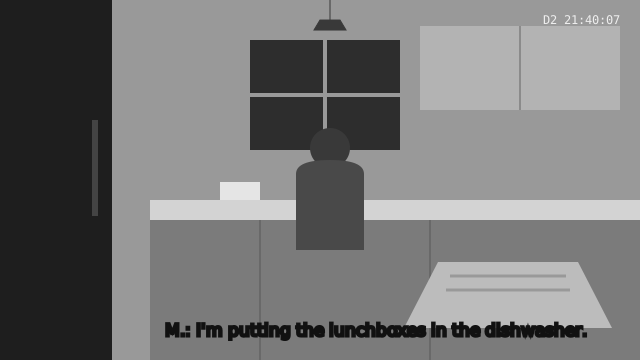
A 34-minute film shot in six kitchens in Eindhoven, Liège and Lyon. Each household agreed to one rule for a week: every unpaid task is said out loud at the moment it is done. Nothing else was asked of them, and the camera stayed on a tripod by the fridge.
The fragment below is from the second night, in a flat in Strijp.
M.: I'm putting the lunchboxes in the dishwasher.
M.: I'm writing the gym bag on the list for tomorrow.
J. (from the other room): You don't have to say all of it.
M.: That was the deal.
J.: Okay. I'm sitting. I'm sitting on the sofa.
M.: I'm booking the dentist for your mother.
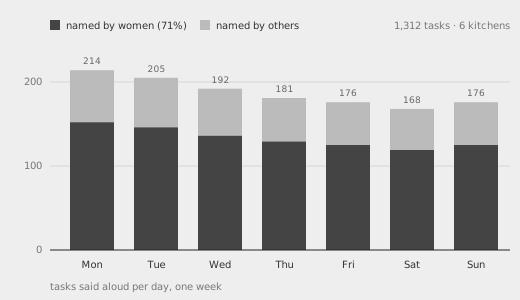
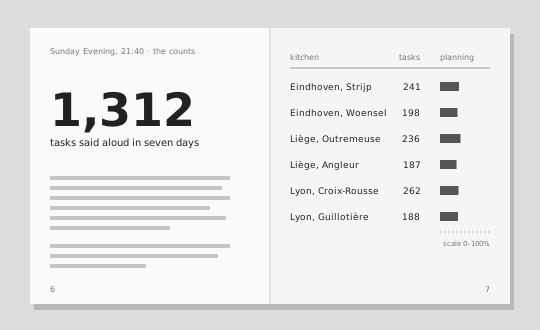
Across the six households, 1,312 tasks were spoken in seven days. Seventy-one percent were named by women, and more than a third were acts of planning rather than doing: remembering a birthday, checking a school app, reordering nappies, reminding someone else. The counts appear only in a small booklet handed out after screenings. On screen, the voices get quieter by Thursday, and in two of the kitchens someone else starts saying their own tasks aloud.
Each screening ends at a long kitchen table, where visitors write down one task nobody in their house has ever named.
P013Mateo Rinaldithe fence can moveworkshop Example0021
Example portfolio. Kept here to show the layout while student work is added.
Runs design workshops with primary schools.
Thesis: The Fence Can Move: Children as Co-Designers of Public Space
A primary school in Doornakkers has a schoolyard of 1,400 square metres of asphalt, two football goals and a fence that decides where the older children may go. For nine weeks in spring, Mateo Rinaldi worked with a class of 26 nine- and ten-year-olds to redesign it, on one condition agreed with the school board in advance: whatever they decided would be built.
The workshops started at 1:1. The children drew in chalk directly on the ground, then walked their lines with a measuring wheel and argued about who got squeezed out. Later they moved to a 1:50 cardboard model spread over two classroom tables, and finally to a yard council in which every proposal needed four votes from children outside the group that made it.
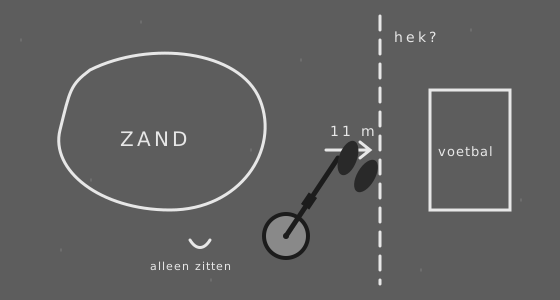
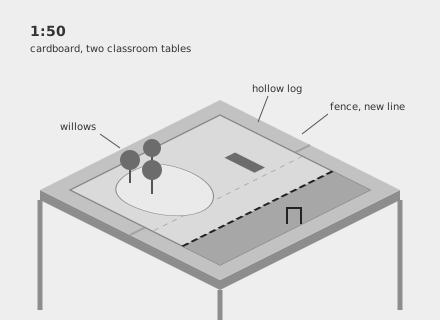
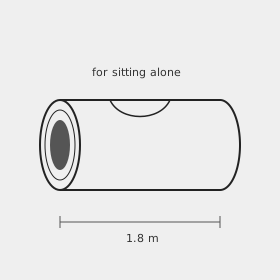
The caretaker, two teachers, a playground officer from the municipality and a landscape architect joined as advisors without a vote. The final plan keeps one goal, moves the fence 11 metres east, and replaces 300 square metres of asphalt with sand, willow and a hollow log that three children insisted should be "for sitting alone". Construction starts in the summer holiday.
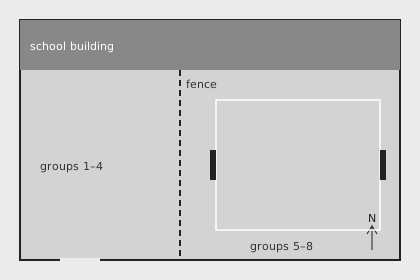
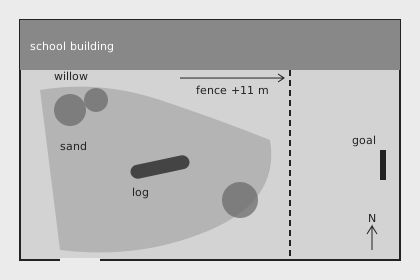
The session plans, the chalk rules and the voting procedure are written up as a twelve-page kit for other schools.
P014Mathis OberholzerPlease Write in Block Capitals: Notes on 212 Forms and the People Who Fill Them Inpublication Example0023
Example portfolio. Kept here to show the layout while student work is added.
Graphic and social designer.
Thesis: Block Capitals: The Form as an Encounter with the State
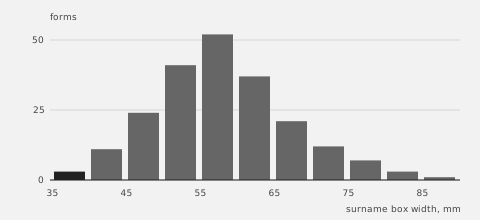
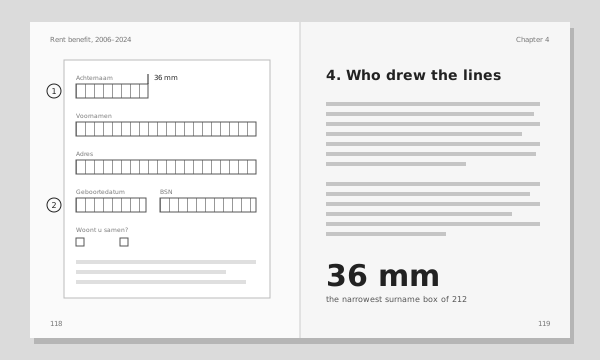
For eighteen months I collected every form I could get hold of: 212 in total, from a residence registration in Eindhoven to a dog-tax exemption in Zürich, a rent-benefit application, a parking permit for informal carers, and an unemployment form printed in three languages. Then I measured them. The narrowest box for a surname was 36 millimetres wide. The forms that promised "approximately 10 minutes" took the people I sat with forty.
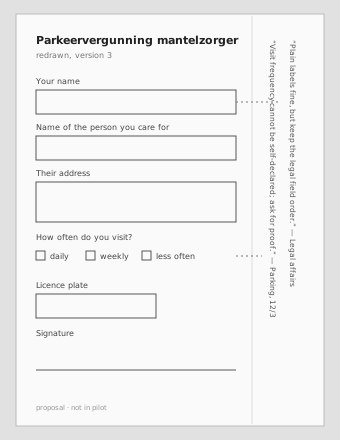
Please Write in Block Capitals is a 320-page book that treats the form as a designed object, with authors, budgets and revisions. Each chapter follows one form through its versions and asks who drew the lines, and why there. A former benefits caseworker annotated the rent-benefit form line by line. A typographer measured box grids and leading. Residents at a language café in Woensel-West filled in forms aloud while I noted where they stopped, what they skipped, and what they asked the person next to them.
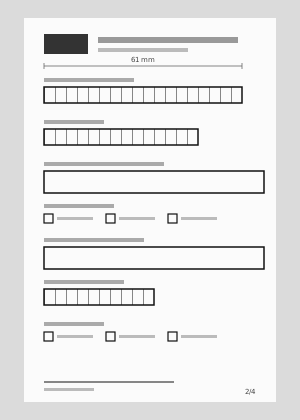
The last section contains twelve redrawn forms, printed on the same paper stock as the originals. A municipal team has taken three of them into a one-year pilot. The other nine remain proposals, printed with the objections of the civil servants who reviewed them running down the margins.
P015Noor el Khatibthe second chairtool Example0024
Example portfolio. Kept here to show the layout while student work is added.
Interpreter (Arabic, Dutch, English) and designer.
Thesis: The Second Chair: Interpreting at the Municipal Counter
At the municipal service desk, the person doing the translating is often eleven years old. I was one of them. From the age of nine I translated for my father at the counter, at the GP and at the housing office, in Arabic and in the Dutch I had started learning at school that same year.
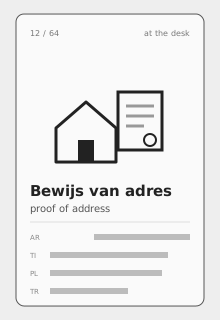
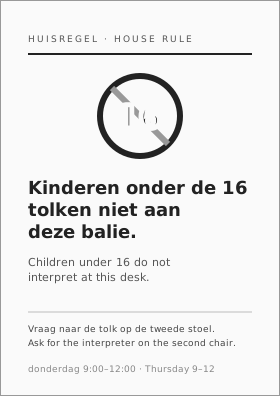
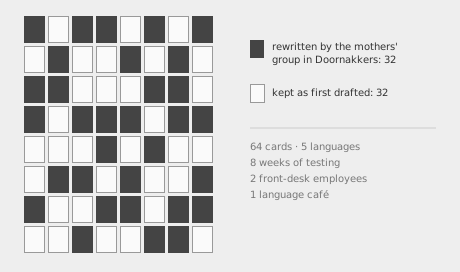
the second chair is a kit for the waiting area and the desk. It has three parts. A pack of 64 picture-and-phrase cards in Arabic, Tigrinya, Polish, Turkish and Dutch, covering the moments that most often go wrong: proof of address, a missing letter with a citizen service number, "please come back with an appointment". A printed house rule for staff that no child under sixteen translates at the desk. And a chair placed next to the resident, for a volunteer interpreter booked through the neighbourhood.
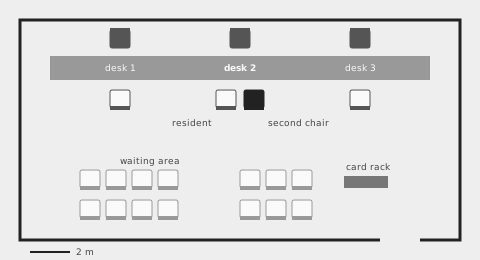
I tested the kit for eight weeks with two front-desk employees, a language café in Woensel-West and a group of mothers in Doornakkers, who rewrote half the cards. The volunteer rota now runs on Thursday mornings without me.
P016Oluwaseun AdeyemiUnpaid Minutes: A Ledger Kept by Riders Between Orderstool Example0025
Example portfolio. Kept here to show the layout while student work is added.
Former delivery rider, now designer and organiser.
Thesis: Unpaid Minutes: Waiting Time in Platform Delivery Work
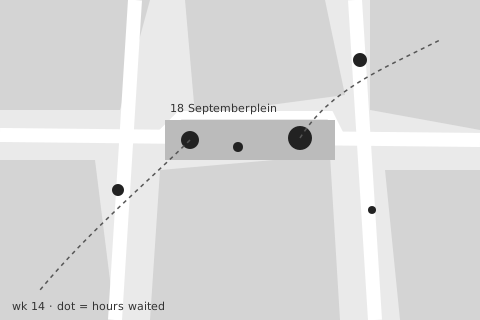
For eight months I rode alongside platform couriers who wait for orders outside a burger chain on the 18 Septemberplein and in a supermarket car park in Woensel. The apps count what they pay for: pickup, drop-off, distance. They do not count the time spent standing next to a scooter in the rain, refreshing a screen.
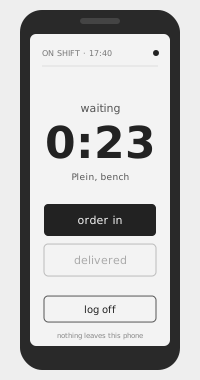
Unpaid Minutes is a paper logbook and a small open-source timer that a rider starts when they log on and stops when they log off. It records three things only: when an order comes in, when it is delivered, and where the rider was waiting in between. Nothing leaves the phone unless the rider decides to share a week.
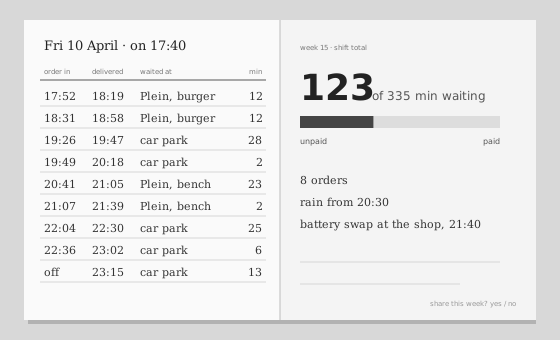
Twenty-three riders kept the log for at least a week. Across 1,140 logged hours, roughly a third of the time on shift was spent waiting, most of it on Friday and Saturday evenings when the most riders are online. The shared weeks were printed as a wall chart that riders took to a meeting with a municipal labour inspector and a union organiser in April.
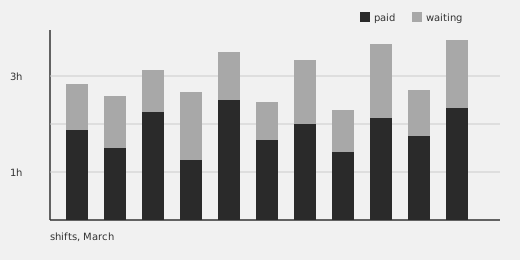
The timer changes nothing about the rate. What it gives riders is a record in their own hands that no dispatcher can edit. It was built with two riders who also write software, a bike mechanic in Strijp who lets couriers charge batteries in his shop, and a translator working in Portuguese, Arabic and Tigrinya. The code and the logbook template are free to copy.
P017Priya RaghunathanThe Darning Tableworkshop Example0027
Example portfolio. Kept here to show the layout while student work is added.
Textile designer based in Eindhoven.
Thesis: Mending in Company: Repair Circles as a Social Form
Every Thursday evening from October to May, a table at the back of a community centre in Woensel-West was laid with needles, wool, a darning mushroom and a pile of other people's clothes. These are the questions the repair circle kept coming back to.
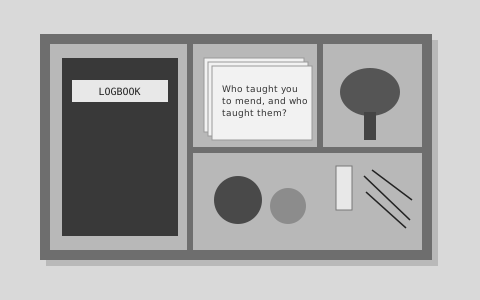
Who taught you to mend, and who taught them?
When does a repair make a garment more yours, and when does it make it look poor?
Should a darn be hidden or shown?
What do you do with a jumper that belonged to someone who has died?
Why do the men who come only ever bring trousers?
How many hours is a sleeve worth?
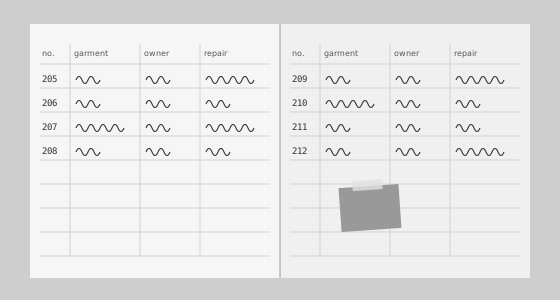
The workshop is now a format anyone can run: a box of tools, a deck of question cards, and a logbook that records each garment, its owner and what was done to it. After thirty Thursdays the logbook holds 212 repairs.
P018Ruben AchterbergPlease Take a Numberfilm Example0028
Example portfolio. Kept here to show the layout while student work is added.
Filmmaker.
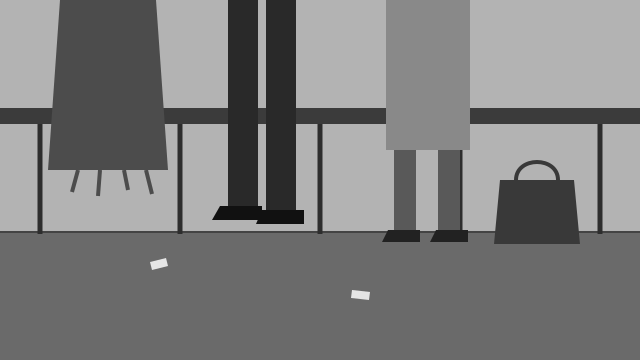
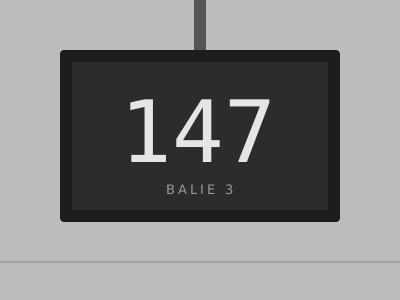
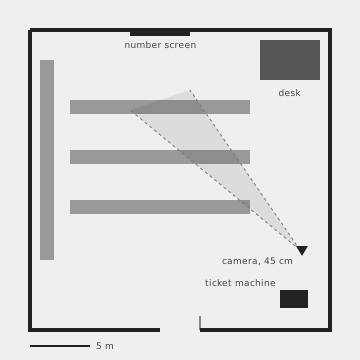
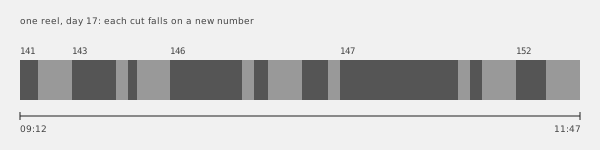
A 38-minute film shot over six weeks in the waiting room of an outpatient clinic in Eindhoven, from a fixed camera at knee height, with the consent of staff and patients. No faces: only coats, bags, feet, the ticket machine and the number screen. Achterberg cut to that screen. Each cut falls when a new number is called, so the longest waits make the longest shots.
P019Sanne de WitQuestions for the 03:00 Citytext Example0029
Example portfolio. Kept here to show the layout while student work is added.
Writer and night-shift nurse.
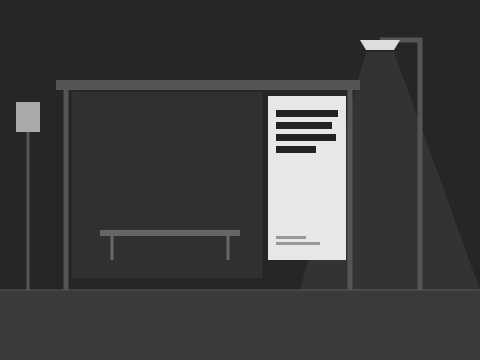
Twenty questions collected between 23:00 and 07:00 over one winter, from cleaners, nurses, security guards, bakers, taxi drivers and warehouse pickers in Eindhoven. They are printed as a poster series for the bus shelters on the night routes. Eight of them:
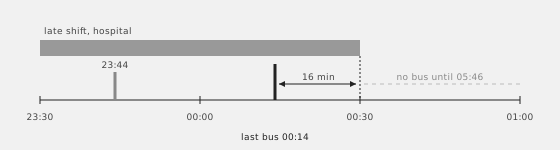
Why does the last bus from the hospital in Woensel leave at 00:14 when the late shift ends at 00:30?
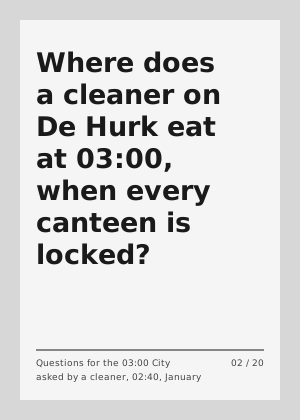
Where does a cleaner on the De Hurk business park eat at 03:00, when every canteen is locked?
Who is the all-night pharmacy for, and why is it on the other side of the city?
Why are the streetlights on the industrial estate dimmed at 01:00 while the loading docks are still working?
Who decided that neighbourhood consultation evenings start at 19:30?
What does the child of a night-shift parent do with the school's phone call at 08:45?
If the city can appoint someone to speak for its bars at night, who speaks for the bakery?
How quiet does a flat in Woensel need to be for someone to sleep at eleven in the morning?
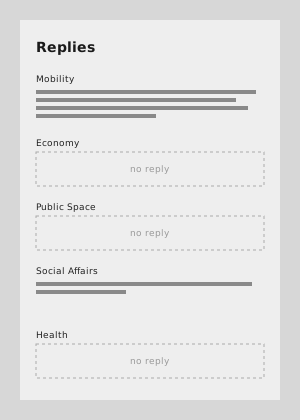
The questions were sent to five municipal departments. The replies, and the silences, are printed on the back of each poster.
P020Seo-yeon ParkEleven Chairs, Four Platesinstallation Example0030
Example portfolio. Kept here to show the layout while student work is added.
Works with elderly residents in Eindhoven.
Thesis: Four Plates: Loneliness, Ageing and the Shared Meal
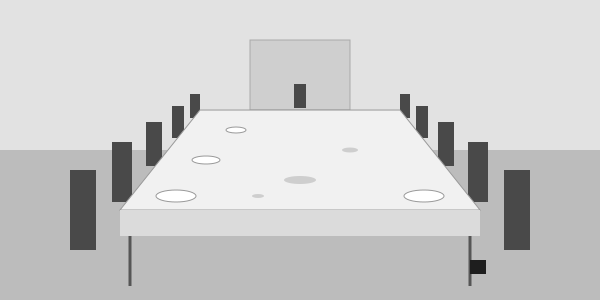
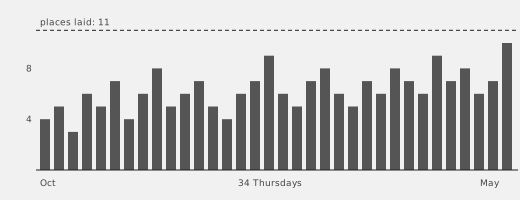
A long table in a community centre in 't Hofke, laid every Thursday for eleven and rarely full. For eight months Seo-yeon Park cooked there with residents over seventy who live alone, and recorded what was said while the rice went round. The installation is that table, stains included, with the following fragment playing from a speaker under the fourth chair.

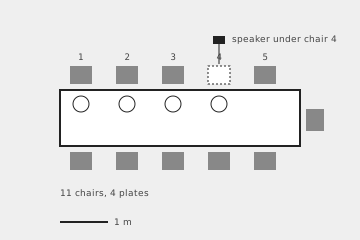
— Do you want the end piece?
— My husband always took the end piece.
— So take it now.
— (laughs) I don't like the end piece. I never liked it.
— Then why did you let him have it?
— Because then it was his. Something has to be someone's.
— Pass the kimchi. Is that how you say it?
— Close enough.
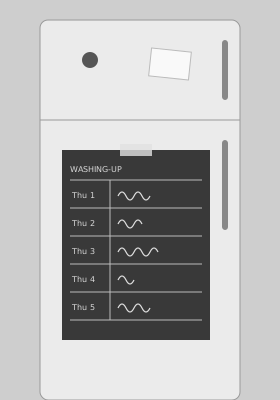
The project started from the gyeongnodang, the senior pavilions in Korean apartment blocks where older residents eat, nap and play cards without anyone running a programme. In Eindhoven the nearest equivalent tends to come with a coordinator and a sign-up sheet. The Thursday table has neither. Whoever cooks chooses the menu, the washing-up rota is chalked on the fridge, and the fourth chair stays empty for someone who has not come yet.
P021Thabo NkosiSeed Ledgerarchive Example0031
Example portfolio. Kept here to show the layout while student work is added.
Designer and seed saver.
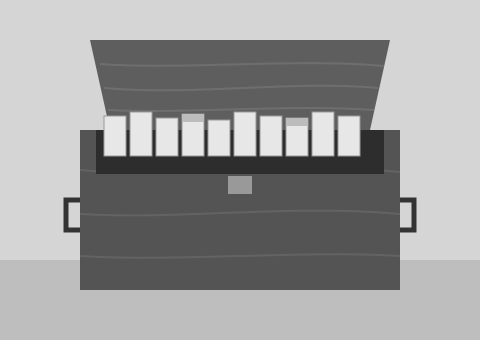
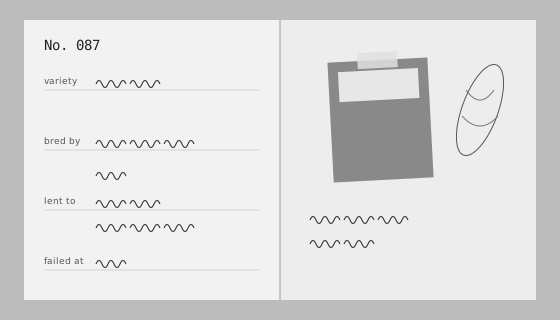
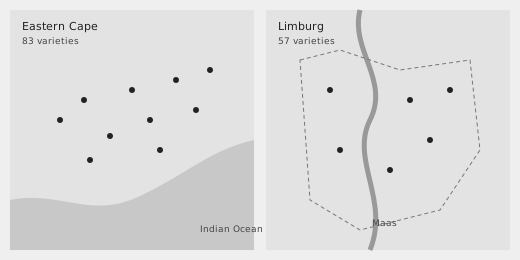
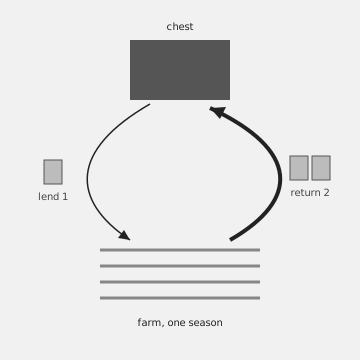
Thabo Nkosi collected 140 seed varieties from small farmers in the Eastern Cape and Dutch Limburg, each with a handwritten page: who bred it, who it was lent to, what it failed at. Nothing in the ledger can be bought or patented. The archive travels in a wooden chest and lends seed on one condition: return twice as much next season.
P022Tomás Ibarra QuinteroThe Permit and the Wellarchive Example0032
Example portfolio. Kept here to show the layout while student work is added.
Lives in Eindhoven since 2019.
Thesis: Who Gets the Water: Permits, Wells and Drought in Two Regions
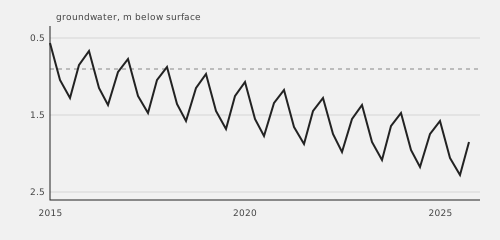
In the summer of 2025 the regional water board banned irrigation from surface water across most of eastern Brabant, for the third time in five years. That same month, in the province of Petorca in central Chile, municipal trucks were still delivering drinking water to villages whose river dried up more than a decade ago, while the avocado terraces on the slopes above stayed green.
Tomás Ibarra Quintero grew up between these two situations: his mother's family farms near Cabildo, and he has lived in Eindhoven since 2019. The Permit and the Well is an archive of the paperwork that decides who gets water when there is not enough of it. It holds extraction permits, meter readings, pumping logs, sprinkling bans, sale contracts for water rights, and the handwritten notebooks of a rural drinking-water committee.
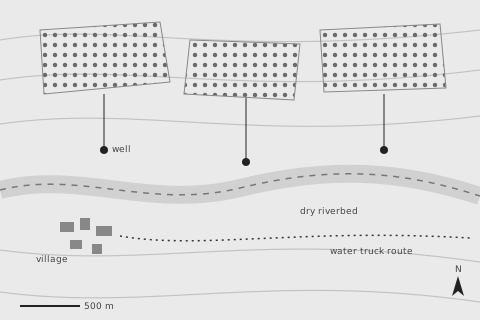
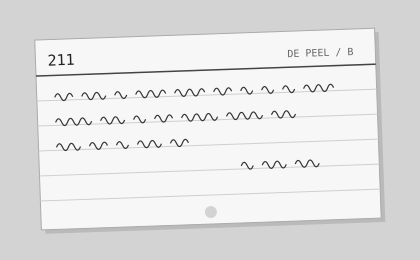
The 418 documents from both places are catalogued in one shared index, so that a Brabant irrigation permit and a Chilean water-rights deed sit side by side on the shelf. Each card records who signed, who measured, and who was never asked. Much of the material was gathered with a dairy farmer near Deurne, a groundwater hydrologist, a former treasurer of the water committee, and a notary's clerk in Valparaíso who helped read the title deeds.
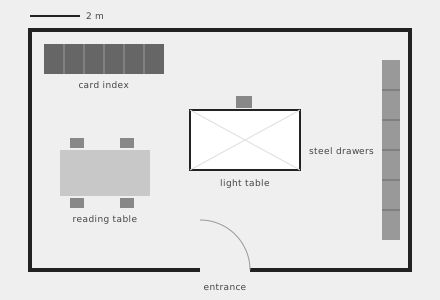
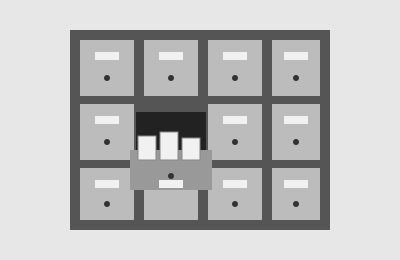
In the show the archive is a reading room with a card index, a set of steel drawers and a light table. Visitors can request any document and add a note to its card. A copy of the index is travelling back to Petorca, where the committee will keep it in the cupboard with the pump keys.
P023Wen-Hsuan TsaiArmrest: Notes on Benches That Do Not Want You to Lie Downresearch Example0034
Example portfolio. Kept here to show the layout while student work is added.
Designer and researcher of public space.
Thesis: Armrest: Hostile Design and the Right to Lie Down
Over one year Wen-Hsuan Tsai measured every public bench within a twenty-minute walk of Eindhoven Centraal: 312 of them, from the station square to the edge of the Stadswandelpark. For each one she recorded seat height, depth and length, material, the number and spacing of armrests, whether it faced traffic or turned away from it, and whether it had shade.
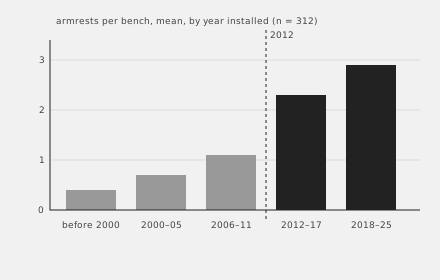
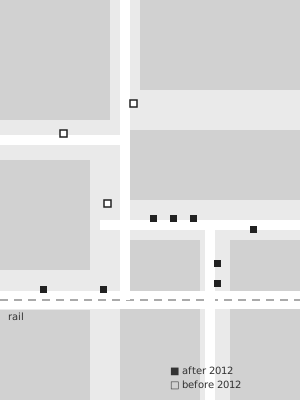
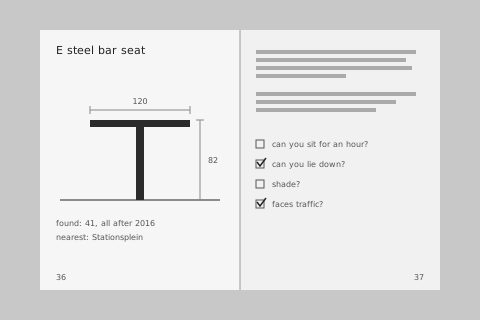
The measurements show a pattern that is easy to feel and hard to prove. Benches installed after 2012 are shorter, carry more armrests, and are more often single perches or sloped seats that allow leaning but not sitting for long. Around the station, the most common new seat is a steel bar at hip height.
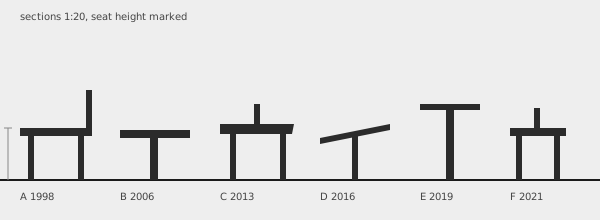
Tsai also sat on each bench type for an hour at different times of day and asked the people who share them what the bench was for and who it was against: a street cleaner, a man who sleeps near the bus station, two older women waiting for the bus to Geldrop, a landscape architect at the municipality. Several designers she interviewed had never been told why armrests were specified. The requirement had simply arrived in a tender document.
The outcome is a pocket field guide, an open data set of all 312 benches, and a one-page checklist submitted to the municipality's public space department. It asks that before any armrest is added to a tender, someone writes down who it will keep off the bench and where they are expected to go instead.
P024Yirang OkSmall Machines for Shared Soilproject Example0036
Example portfolio. Kept here to show the layout while student work is added.
Designer and developer. Runs the studio withok.
Thesis: Tools Held in Common: Low-Tech Making and Shared Ground
Placeholder text. A year of making low-tech tools with neighbours around a disused allotment in Woensel-Noord: a seed drawer, a rain log, a borrowing shelf that nobody owns.
The project asks what a tool becomes when it is kept in common, and who gets to repair it. Replace this file with your own text — the format is in README.md.